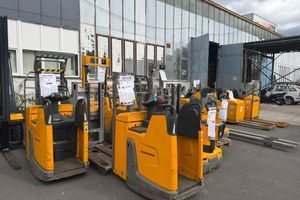
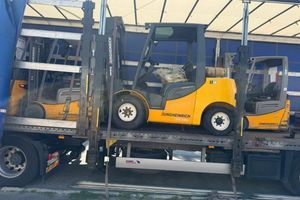
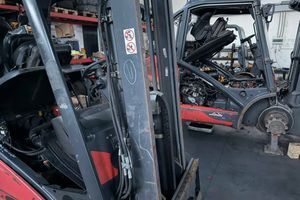
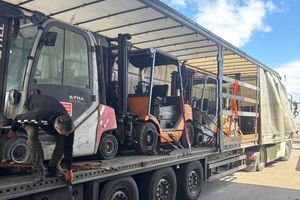
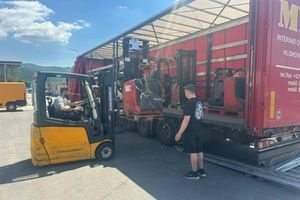
We recently regenerated the traction battery of an electric forklift for an Austrian company. Every project like this starts with diagnostics: first we find out the real condition of the battery, and only then do we decide whether it is worth restoring. Below we explain how it works, what signs show that a battery needs attention, and when regeneration is a better option than replacement.
What is traction battery regeneration?
The traction battery is the key component of an electric forklift, electric stacker or pallet truck. Over time, lead-acid batteries suffer from plate sulphation, the cells drift apart and capacity drops. The truck runs for less time on a single charge, discharges faster under load and spends more time on the charger.
Regeneration (restoration) is a set of procedures in which controlled charge and discharge cycles, equalising charge and electrolyte correction are used to bring the battery back to a working condition. The result depends on how well the plates and cells have survived, so it is impossible to promise specific figures without diagnostics.
Signs that your battery needs diagnostics
- the truck runs noticeably less on a single charge;
- voltage drops sharply under load and the machine loses lifting and driving power;
- the battery gets very hot during charging;
- electrolyte density differs significantly between individual cells;
- the battery discharges quickly after charging;
- you have to top up water much more often than before.
How regeneration works at Booster Lift
The procedure depends on the specific battery, but a typical process looks like this:
- Inspection. We check the case, terminals, connectors, electrolyte level and any mechanical damage.
- Measurements. We measure voltage and electrolyte density cell by cell to find weak cells.
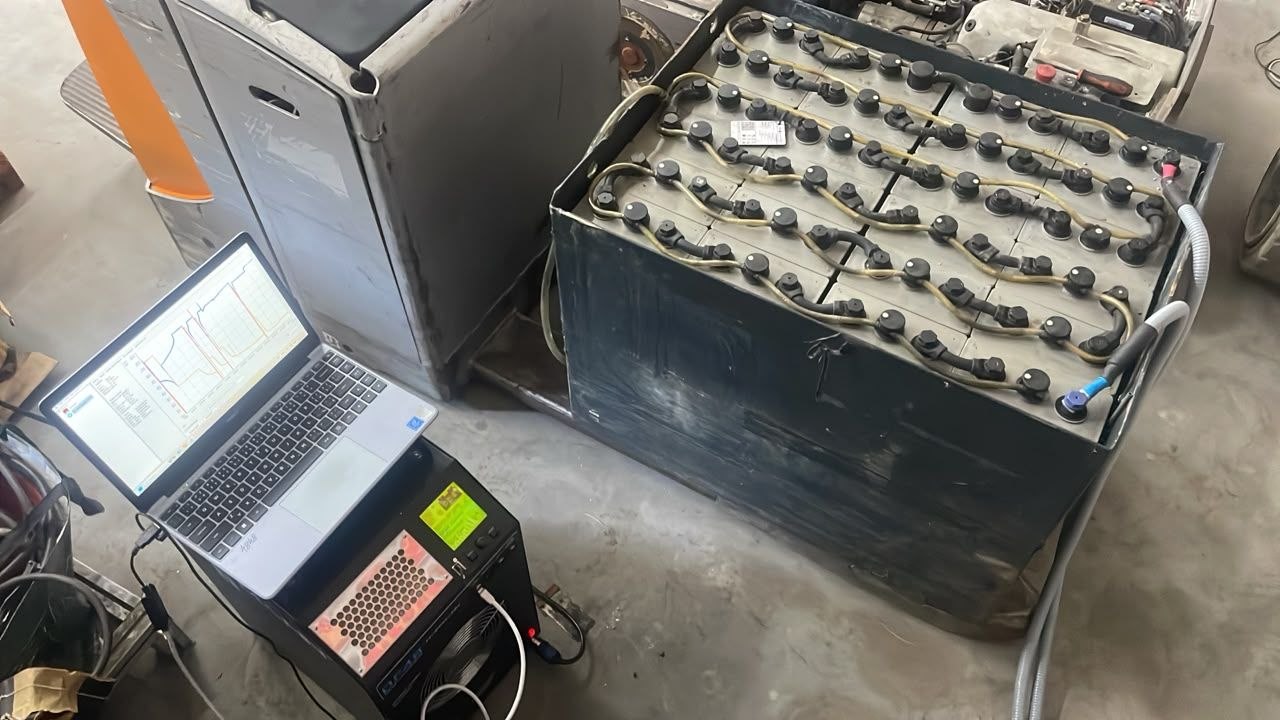
- Connection to diagnostic equipment. The battery is connected to a modern station, and the process parameters are monitored in real time on a laptop.
- Control charge and discharge cycles. They show the real capacity and allow the cells to be balanced.
- Electrolyte correction. If necessary, we add distilled water and bring the parameters back to normal.
- Final test. We record the result after restoration and tell the customer whether the battery is fit for further use.
Regeneration or replacement: which is more cost-effective?
| Situation | Solution |
|---|---|
| Capacity loss caused by sulphation, cell imbalance or improper use | Regeneration, usually much cheaper than a new battery |
| Shorted or destroyed cells, shedding of active material, cracked case | Repair of individual cells or battery replacement |
| The battery has reached the end of its cycle life | Replacement with a new or good-quality used battery |
That is why we start with diagnostics: it saves you from spending money on restoring a battery that can no longer be saved, and from buying a new one where regeneration is enough.
Which forklifts is it suitable for?
Restoration applies to traction batteries of electric trucks from all common brands, including Still, Linde, Jungheinrich and Bobcat, as well as electric stackers and pallet trucks. If you are planning to buy a used electric forklift, the condition of the battery is one of the most important points to check, because it is one of the most expensive parts of the machine.
How to extend the service life of a traction battery
- do not discharge the battery below roughly 20% of remaining capacity;
- charge it fully and on time, and do not leave it discharged for long periods;
- use a charger that matches the battery type and voltage;
- monitor the electrolyte level and top up only with distilled water, usually after charging;
- keep the terminals clean and the case dry;
- carry out an equalising charge and diagnostics periodically.
Frequently asked questions about battery regeneration
Can any traction battery be restored?
No. If the plates are destroyed, there are shorted cells or mechanical damage, regeneration will not help. This is determined during diagnostics.
How long does regeneration take?
The duration depends on the type, capacity and condition of the battery, as the process includes several charge and discharge cycles. Our manager will give you an estimate after diagnostics.
How is regeneration different from normal charging?
Normal charging simply tops up the charge. Regeneration includes diagnostics, control cycles, cell balancing and electrolyte correction to recover lost capacity.
Do you work with customers from other countries?
Yes. We recently regenerated a battery for an Austrian company, for example. Please ask our managers for details of cooperation.
Need battery diagnostics or regeneration?
Tell us about your machine and the problem, and our specialists will advise whether it makes sense to restore the battery.
Request a consultation